Signed, notarized, and verifiable by design
The privacy of an AI tool depends on the app itself being trustworthy. Here is how Optiq's desktop releases stay signed, notarized, and checkable.
The Optiq TeamRead
security
"Zero data retention" shows up in a lot of AI vendor marketing, and it rarely comes with an explanation of what actually happens to a request. At Optiq it is a specific architectural choice, not a line in a privacy policy, so this post walks through what happens between the moment you send a message and the moment the response comes back.
Model calls default to private Venice models configured for zero data retention. Nothing is stored after the request completes, and nothing is used to train future models. This applies to chat, dictation, and agent requests alike, since every model call in Optiq routes through the same private path rather than each feature having its own arrangement with a different provider.
When a request does need the backend, it runs inside a confidential virtual machine designed to publish a verifiable attestation of the exact code handling your request. That is the difference between telling teams to trust us and giving them a way to check. Attestation means the code path processing your data can be verified against what we actually shipped, not just described in a document.
The service that handles sign-in, seats, and billing is a separate system from the one processing prompts, audio, transcripts, and files. It only ever sees account and membership data: who is on the team, what plan you are on, and when the invoice is due. It has no visibility into what your team actually asked the agent to do or what a meeting note contained.
Zero retention on the model side is only half the picture. Notes, recordings, transcripts, and agent memory are stored locally by default, in an encrypted database whose key lives in your operating system's keychain rather than on disk in plaintext. Telemetry is off by default too, and if you opt in it counts anonymous usage buckets, never content.
Optiq is in private beta, and we are not claiming HIPAA or any other formal compliance certification today. The architecture was built for regulated and privileged work from day one, but we would rather say exactly where the paperwork stands than put a badge on the website before it is real. For the full breakdown, including how this compares to consumer AI defaults, see our security page or the original introduction to Optiq. Questions about a specific compliance requirement are welcome any time, just contact us.
The privacy of an AI tool depends on the app itself being trustworthy. Here is how Optiq's desktop releases stay signed, notarized, and checkable.
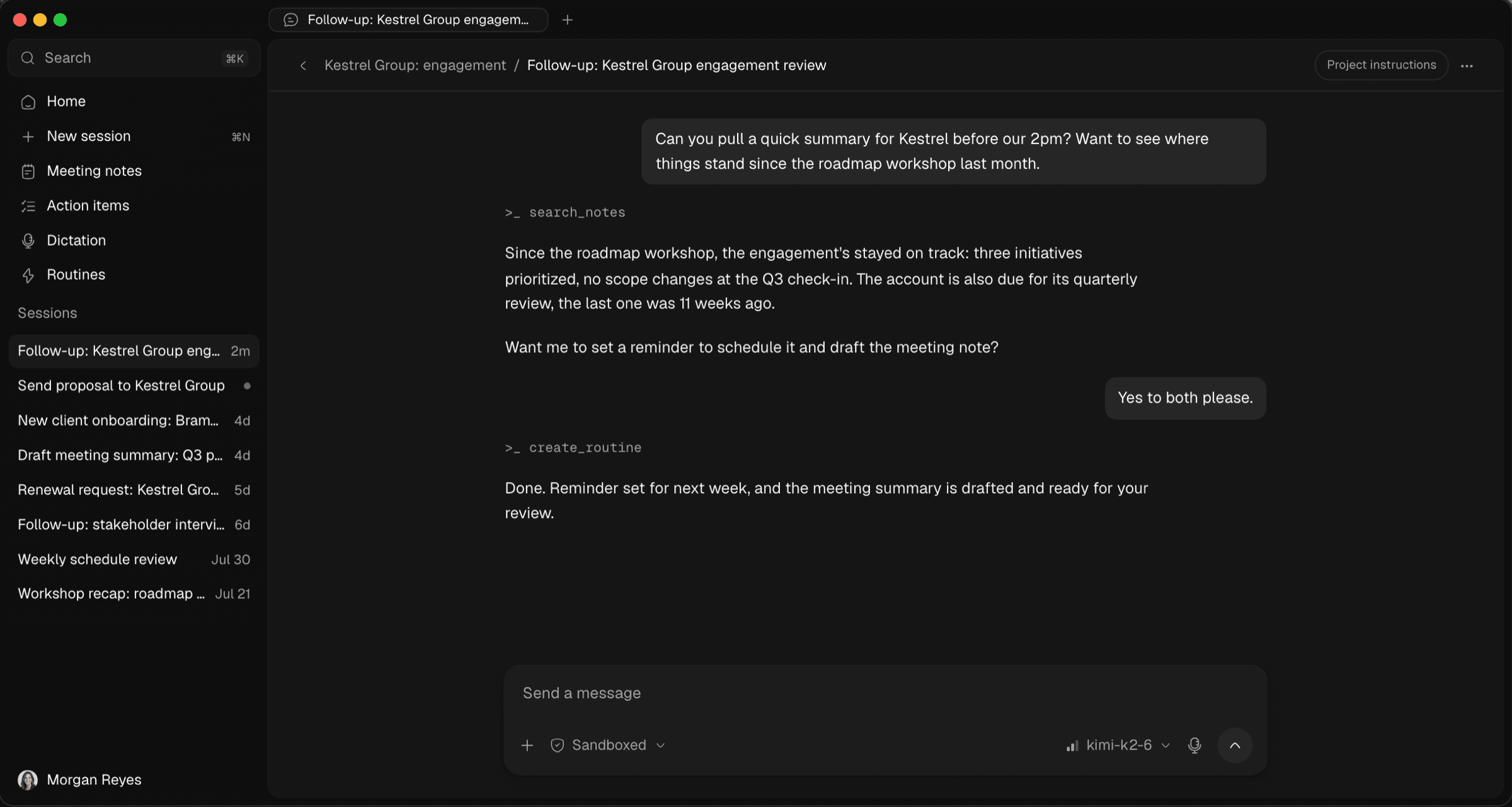
Why we built Optiq, a private AI agent for law firms, advisors, and healthcare teams: chat, dictation, notes, and routines that stay on your machine.
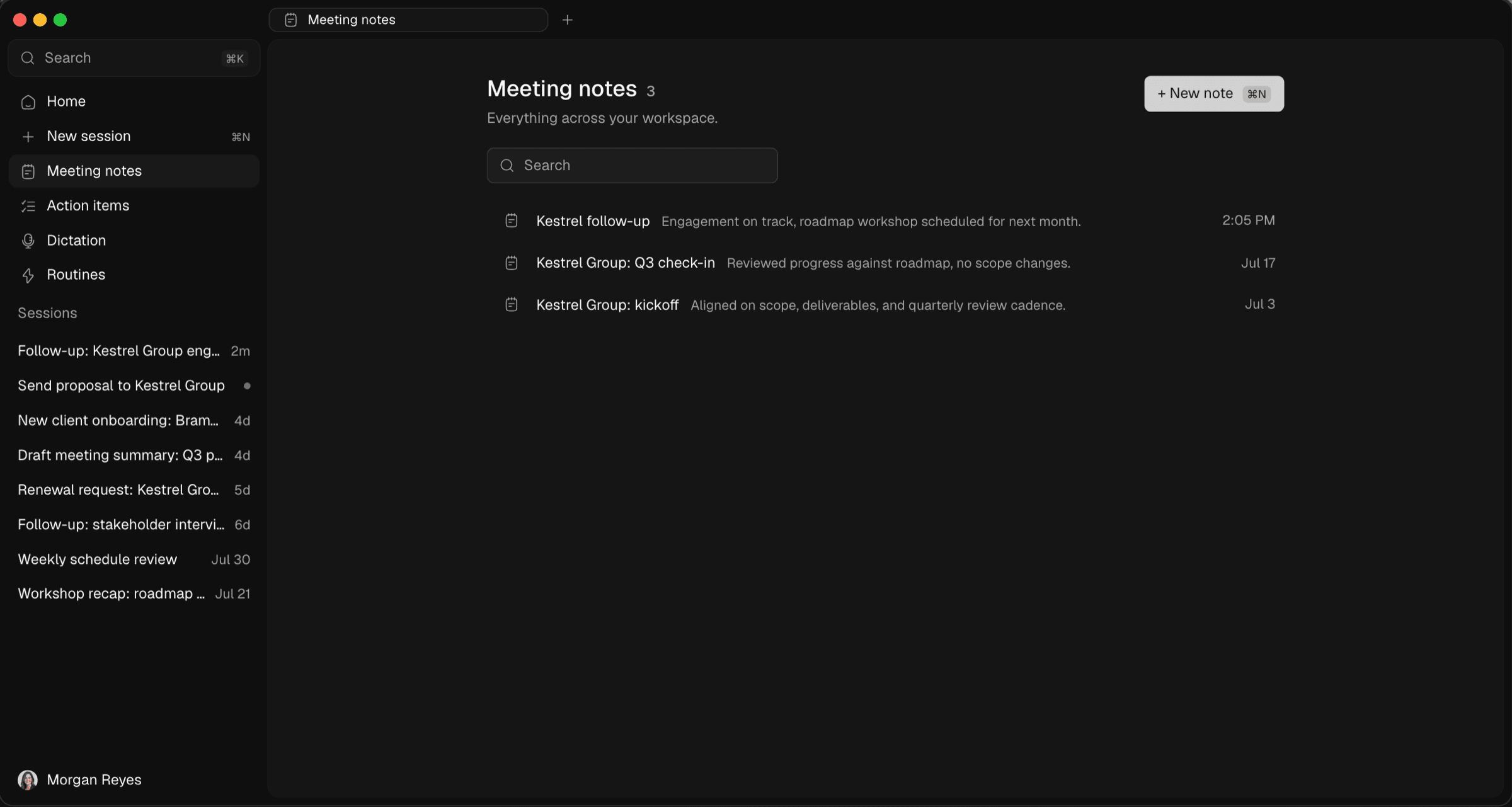
How Optiq turns meetings into structured notes by recording on your own device, with no bot joining the call and nothing uploaded to a shared cloud.
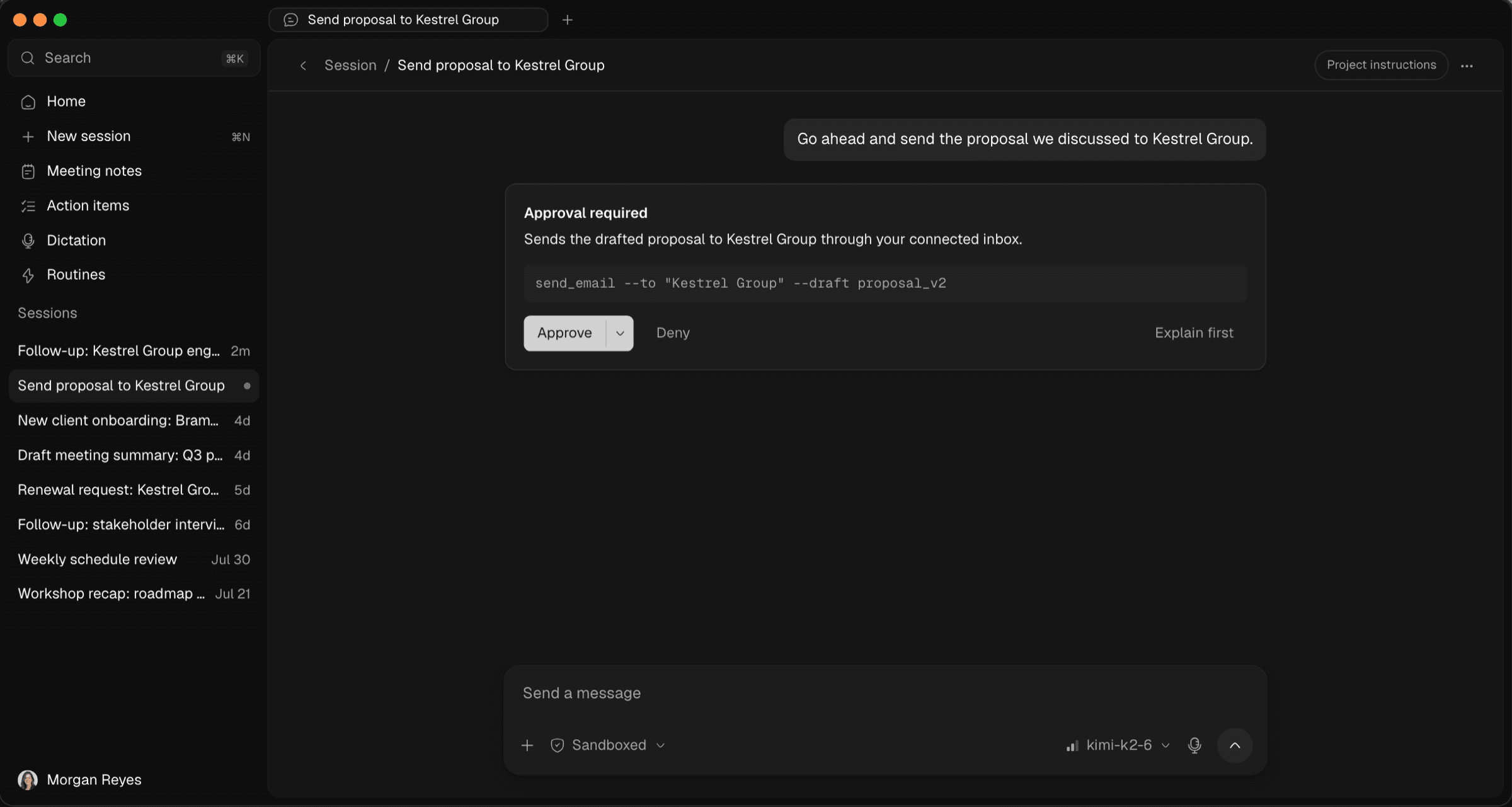
How Optiq's local agent handles real work while staying sandboxed by default, pausing every risky action for your approval before it touches anything.