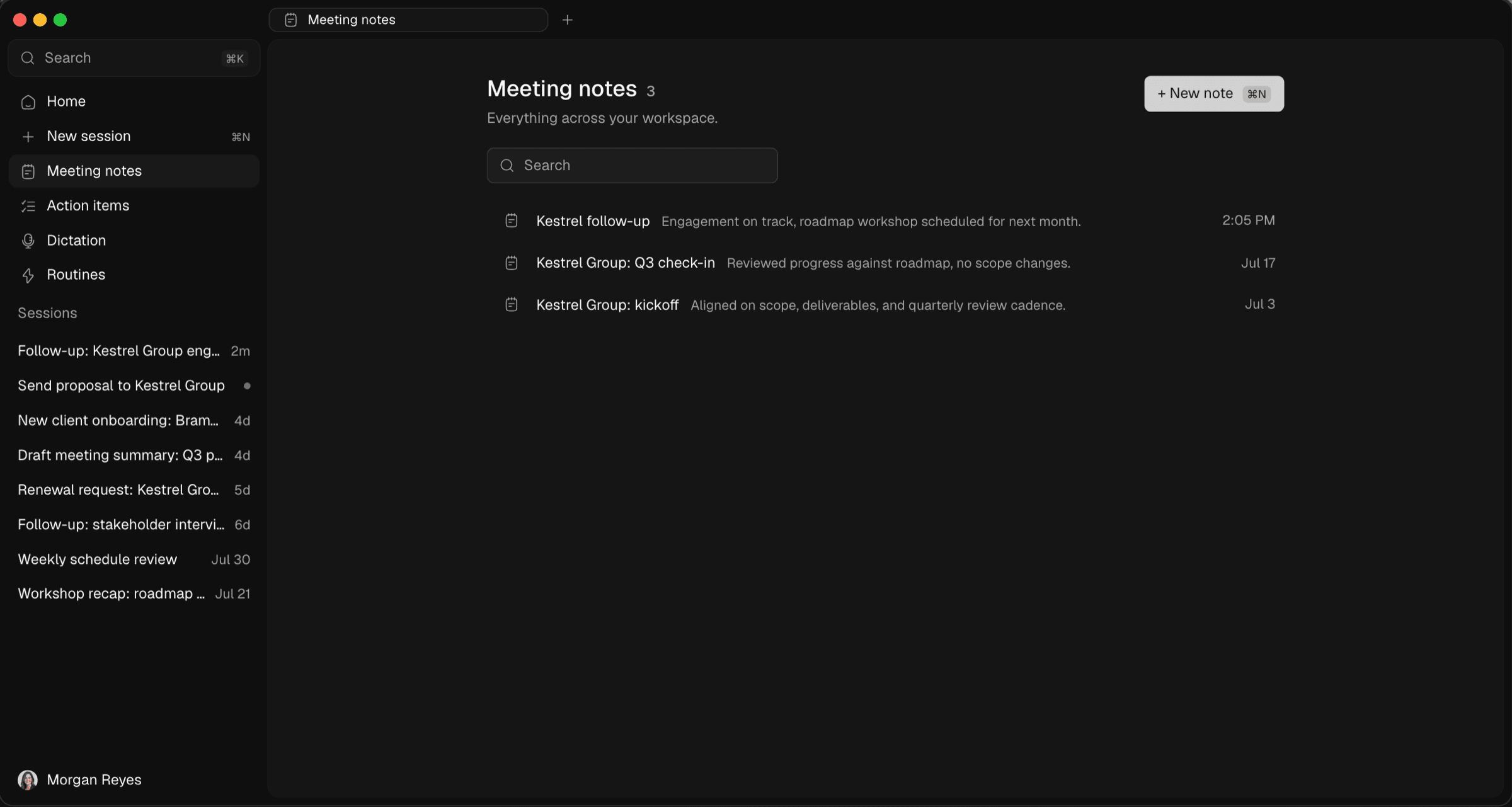
Meeting notes without a bot on the call
How Optiq turns meetings into structured notes by recording on your own device, with no bot joining the call and nothing uploaded to a shared cloud.
The Optiq TeamRead
product
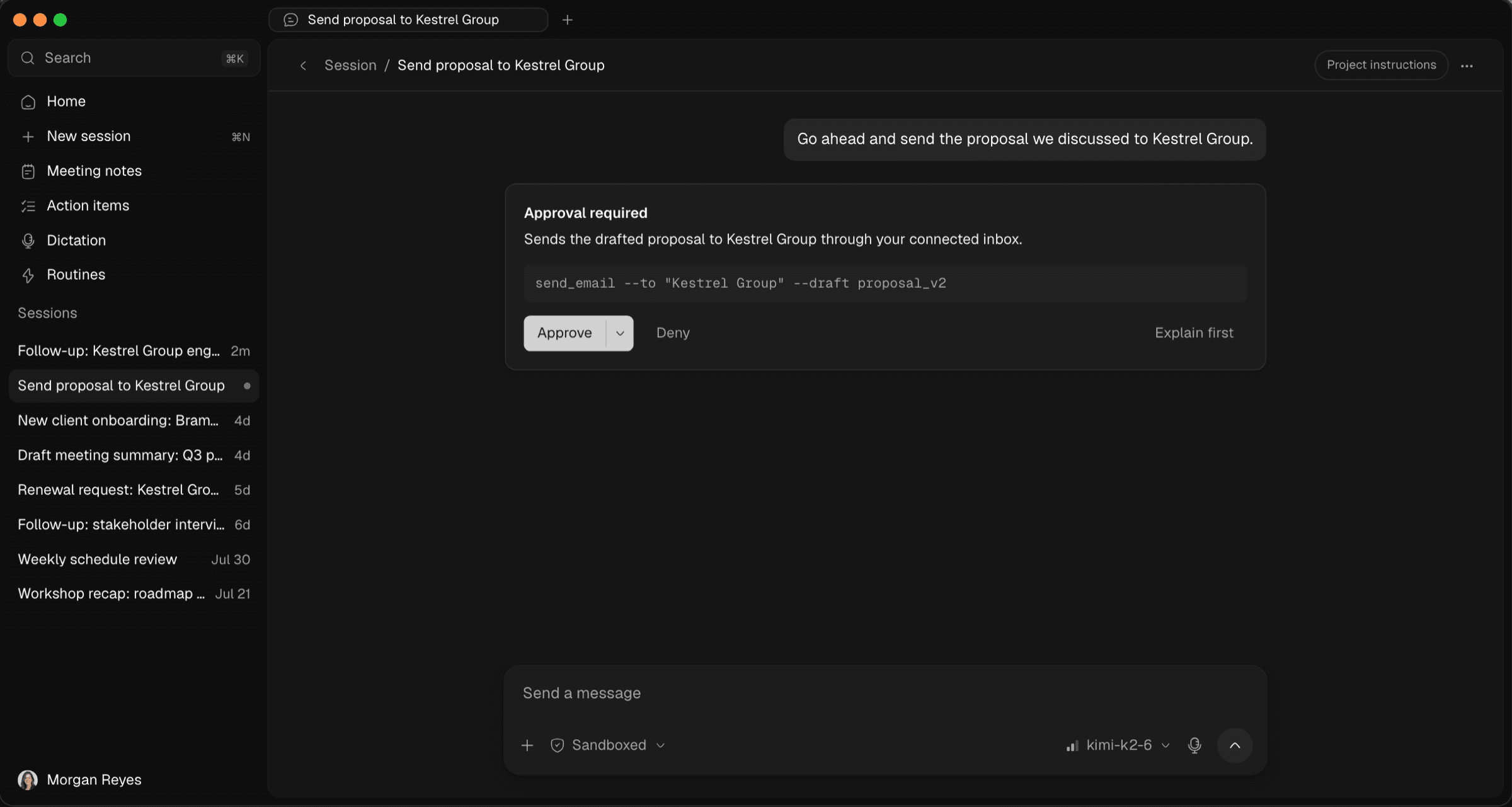
Handing an AI agent real work, sending an email, filing a document, updating a record, only makes sense if you can trust what it does next. Most agent products ask for that trust up front, before you have seen a single action. Optiq asks for it one step at a time: the agent proposes, and you decide.
Point the agent at a folder of files, ask it to research something across your notes, or have it draft a document from scattered material, and it works inside a sandbox rather than with open access to your machine. That boundary exists whether the task is small or large, so the agent's default posture never depends on how much you trust a particular request.
Anything that changes something outside the sandbox, writing a file, sending a message, running a command, stops and waits. You see the exact action the agent wants to take, in plain language and as the underlying command, before it runs. From there you can approve it, deny it, or ask the agent to explain first if the intent is not obvious.
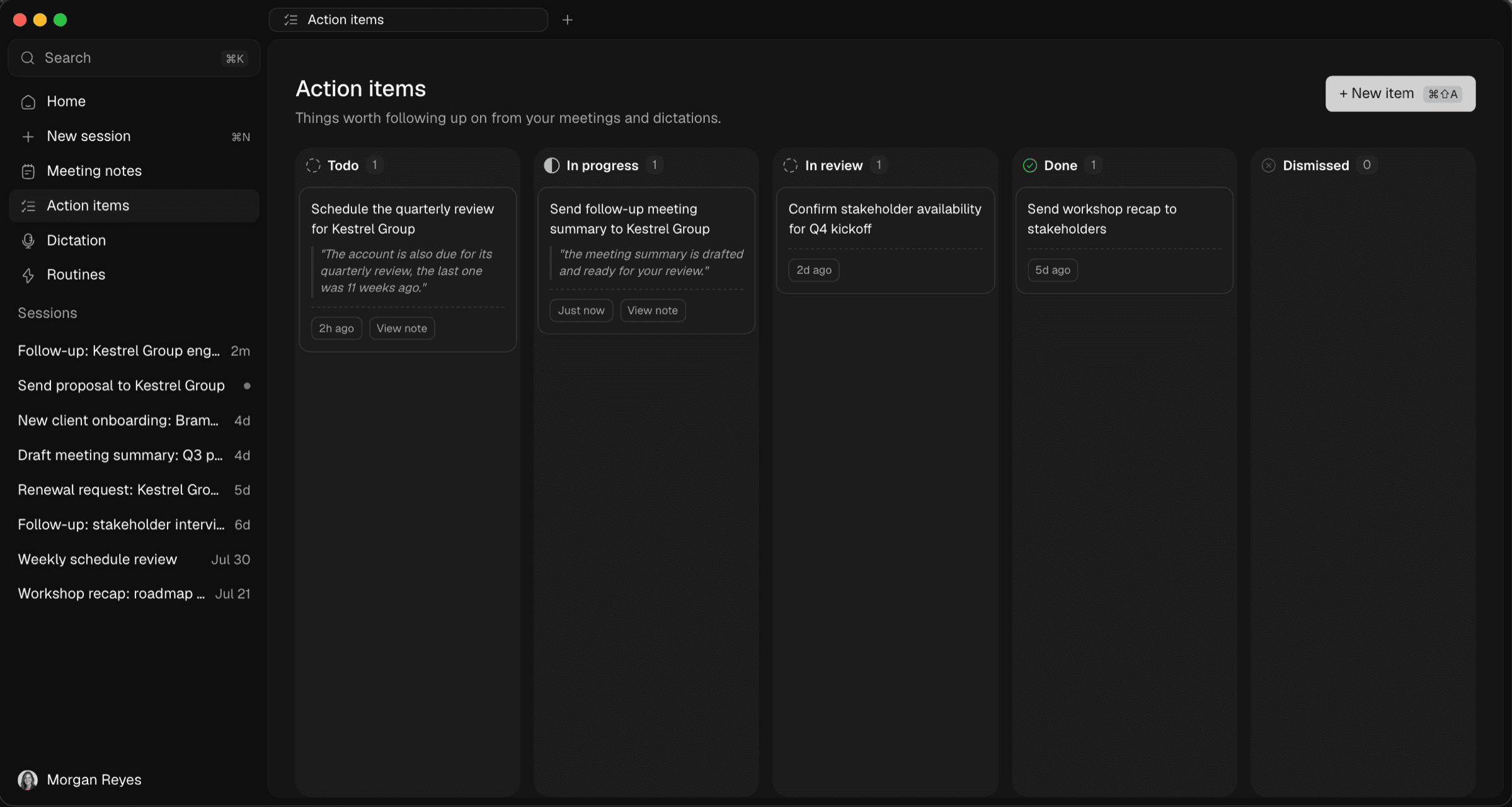
The agent's approval flow is only useful if the tasks it works from are accurate in the first place. That is why every commitment surfaced on a call becomes a tracked card automatically, pulled straight from your meeting notes rather than typed in after the fact. You can move a card yourself or hand it to the agent, and agent-capable items still wait for your approval the same way any other risky action does.
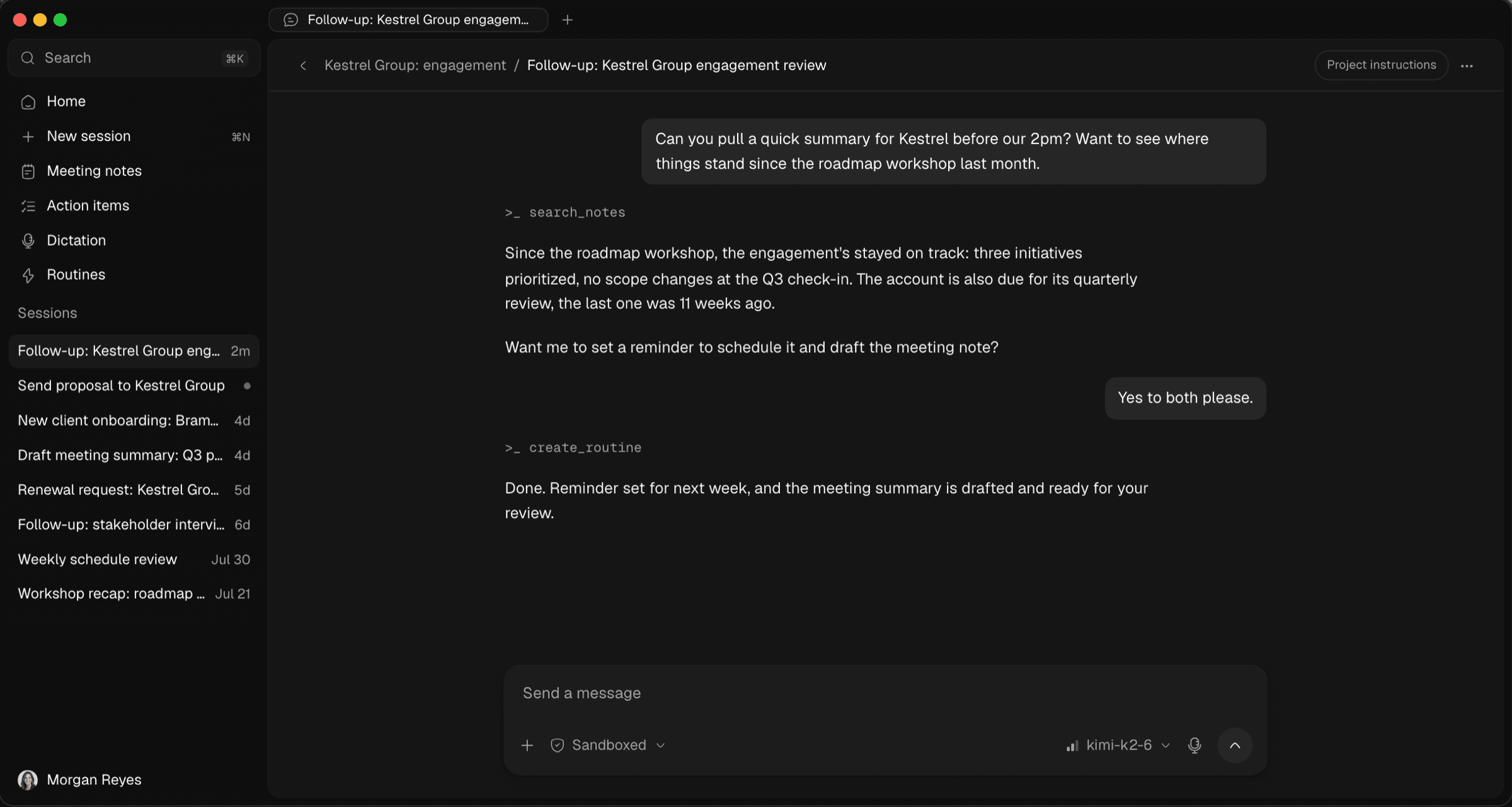
For work that repeats, routines let you schedule or trigger agent work on a recurring basis, but they follow the same trust model. A new routine starts supervised, and mutating actions still wait for approval by default. Autonomy is something a routine earns over time, not something it starts with.
This is the same principle behind everything Optiq does with your data: nothing happens quietly. If you want the details on how requests are handled once they leave the sandbox, our security page covers the confidential backend and zero data retention models behind chat, dictation, and the agent. To see the approval flow on your own work, book a demo and we will walk through it live.
How Optiq turns meetings into structured notes by recording on your own device, with no bot joining the call and nothing uploaded to a shared cloud.
Why we built Optiq, a private AI agent for law firms, advisors, and healthcare teams: chat, dictation, notes, and routines that stay on your machine.
Zero data retention is an easy claim to make. Here is the actual architecture behind it at Optiq, from private models to a confidential backend.
The privacy of an AI tool depends on the app itself being trustworthy. Here is how Optiq's desktop releases stay signed, notarized, and checkable.